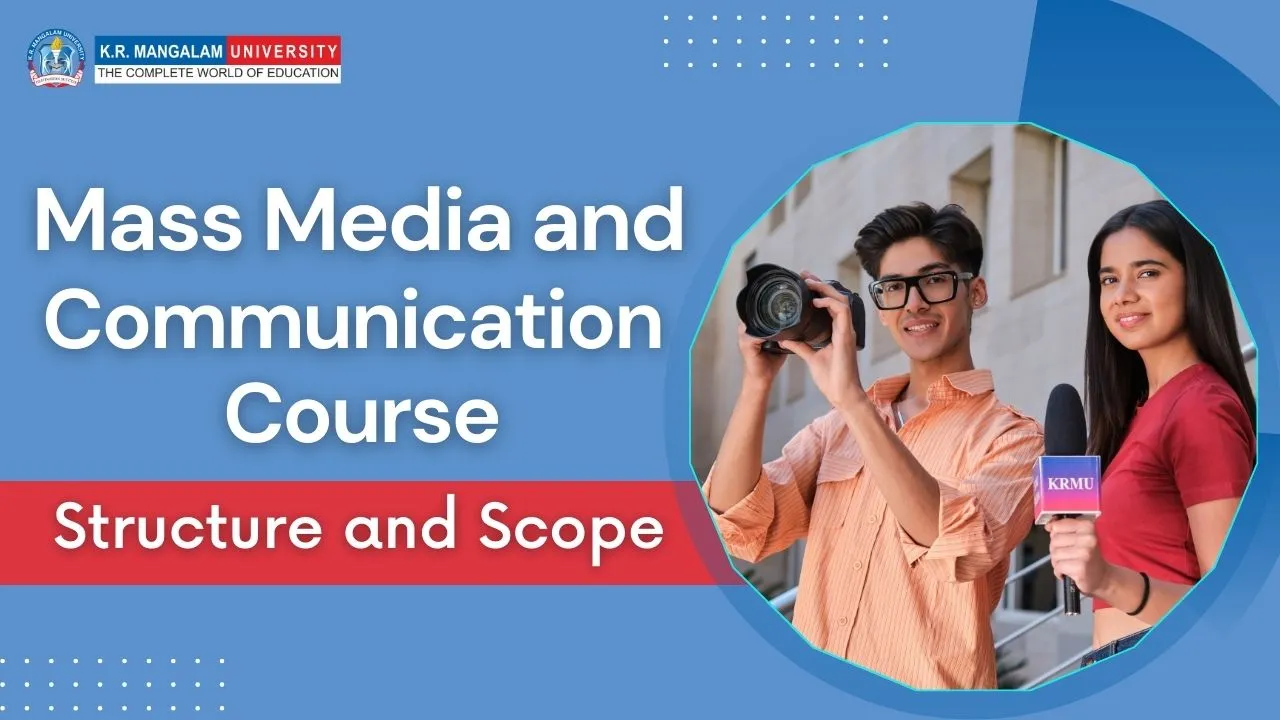
Mass Media and Communication have become two of the most influential fields in today’s digital era. They shape how information is shared, stories are told, and public opinion is formed. They include news broadcasting and digital journalism, advertising, filmmaking, and social media strategy. This means they offer diverse opportunities for students who wish to build a dynamic and impactful career.
Understanding the difference between mass media and communication and knowing the career scope can help students make informed decisions. For those aspiring to pursue a career in the field of mass media and communication and study in a thriving academic environment, several top journalism colleges in Delhi NCR, including K.R. Mangalam University, are available that prepare students for real-world media challenges.
In this blog, we will discuss mass media and communication in detail.
What is Mass Media and Communication?
Let us first understand the meaning of Mass Media and Communication separately.
Mass Media
Any media or technology used to distribute material or messages to a large audience is known as mass media. It enables communication through various channels, such as:
- Radio
- Television
- Print media (magazines, newspapers)
- Internet media (websites, social media)
- Outdoor media (billboards, posters)
Distributing information, entertainment, knowledge, and ads to a large audience at the same time is the main function of mass media.
In addition to being a means of disseminating messages, mass media serves as a conduit between content creators and viewers. Mass media is the means by which material is disseminated to the general public, whether it be a national newspaper article, a viral Instagram post, or the news on television.
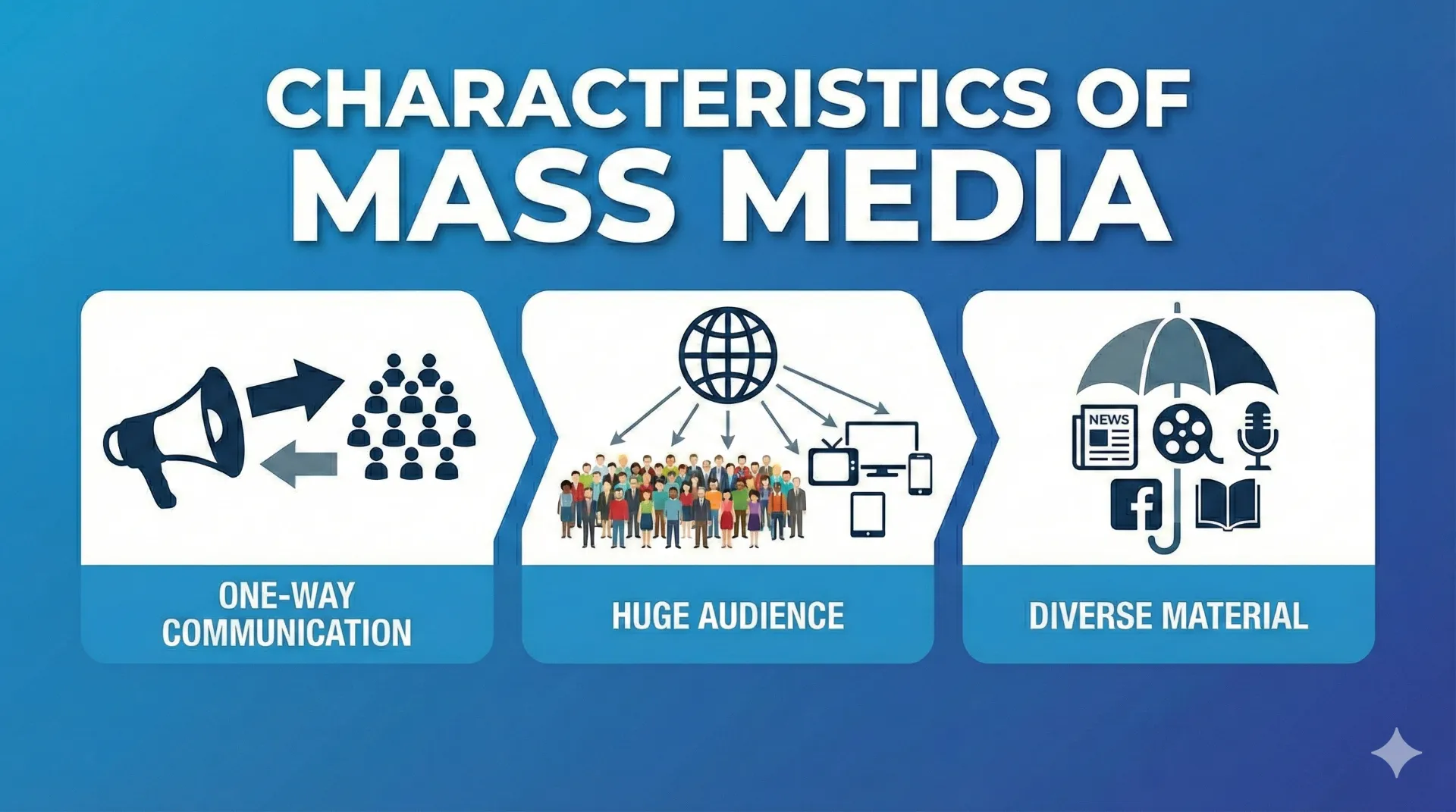
- One-Way Communication: Communication through the media is often one-way. Although additional interactivity has lately been added to digital media, it still sends information from a producer to the viewer without necessarily encouraging engagement or input.
- Huge Audience: The content is meant to be viewed by a huge number of people, typically from a wide geographic area or possibly the entire globe.
- Diverse Material: To satisfy a variety of preferences and interests, the media provides a variety of material, such as news, entertainment, advertising, and social commentary.
Mass Communication
Mass communication refers to the process through which a group of people create, transmit, and receive information using various mediums. While mass media focuses primarily on the channels through which content is delivered, mass communication emphasises the flow of information itself—its creation, regulation, and distribution to large audiences.
Mass communication highlights the relationship between the medium, the message, and the audience. It involves not only producing content but also understanding the techniques used to influence, persuade, and inform the public. This communication can take place through traditional media such as print and radio or through modern digital platforms like social media, blogs, and podcasts.
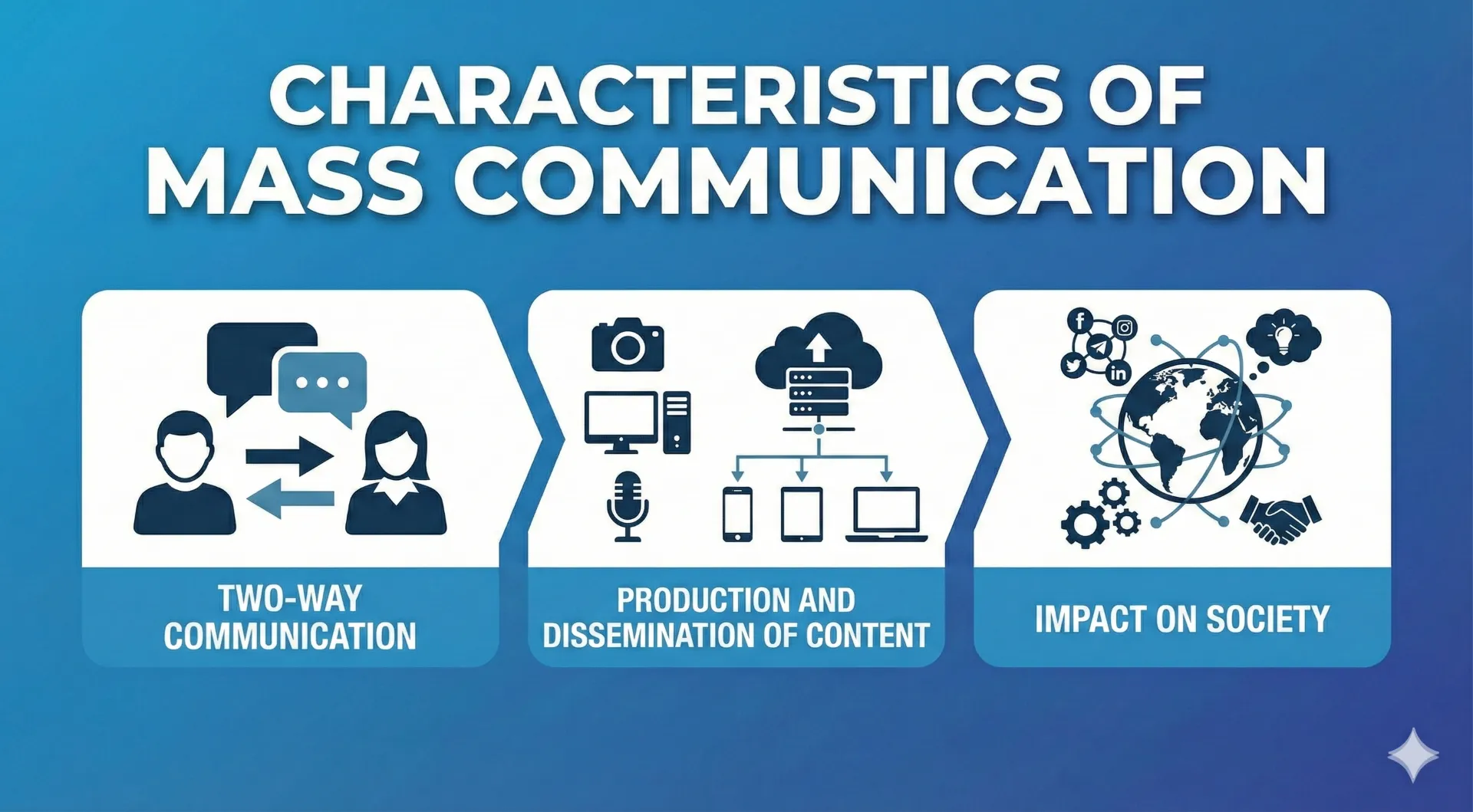
- Two-Way Communication: Although mass communication used to be one-way, it now includes feedback loops, particularly in the modern period when viewers may react to media material through likes, shares, comments, and other forms of involvement.
- Production and Dissemination of Content: This includes both the production of content and the mass media outlets that subsequently distribute it.
- Impact on Society: Public opinion, cultural norms, and social change mobilisation are all greatly influenced by mass communication.
Difference Between Mass Media and Mass Communication
Below are points that will give clear insight into the difference between mass media and communication:
Meaning
Mass Media: The term “mass media” refers to the information-transmission medium (e.g., TV, radio, newspapers, online media).
Mass Communication: The term “mass communication” refers to the complete process of producing, transmitting, and receiving information via mass media channels, including audience reception, message delivery, and content creation.
Function
Mass Media: The main function of mass media is to provide information to a large audience through a vehicle or channel. It provides the means of carrying out the communication.
Mass Communication: It encompasses not just the medium but also the creation of the message, its encoding and decoding, and the audience’s reaction.
One-Way vs Two-Way Communication
Mass Media: Traditionally, mass media employs a one-way communication method in which information is sent from the media source to the audience. Feedback is likely to occur, but it is often limited (e.g., publication letters, online comments).
Mass Communication: With media producers and viewers having real-time back-and-forth conversations that influence one another, mass communication is progressively turning into a two-way process (e.g., social media discussion, audience feedback loops).
Also Read: B.A. in Journalism and Mass Communication: Fee, Scope & More
Current Developments in Mass Media and Communication
The mass media and communication sector offers enthusiastic people a wide range of opportunities due to its strong demand.
- Multimedia Reporting and Digital Journalism: Traditional reporting is quickly being replaced by digital media. In addition to writing, filming, and editing videos, reporters post articles on websites, social media platforms, and YouTube.
- Marketing Using Influencer Content: Influencers and creative media specialists are increasingly the businesses’ main sources of content. The rise in podcasts, YouTube clips, and Instagram reels is more proof.
- AI Media: The way that media information is selected and consumed is evolving due to artificial intelligence. Prediction analysis, content automation, audience targeting, and scriptwriting are all aided by AI technologies.
- Sound Journalism and Podcasts: A podcast has replaced the new radio. Many media graduates are considering jobs as podcast presenters, audio producers, and scriptwriters due to the growing demand.
- AR, VR, and Narrative: The media outlets that are experimenting with immersive journalism are the ones where using AR and VR may make writing stories more interesting, particularly for documentaries and social campaigns.
- Journalism with Data: One of the most important tools for journalists nowadays is data interpretation and visualisation. Graphs, charts, and analytics are used in data journalism to bolster the story’s supporting evidence.
- Media Proficiency in a Cross-Platform Environment: Employers are now looking to hire people who can edit information on several platforms, including periodicals, websites, social networks, and videos.
Reasons to Choose Mass Media and Communication
Below are reasons to choose mass media and communication for studying:
- Numerous Job Paths: There are many diverse job options in the mass media that suit a range of interests and skill levels. There’s a niche waiting for you, whether you’re creatively inclined and want to work in directing, producing, or writing, or you have a penchant for technology and would rather work in editing or camera operation, this field has it all. There are several alternatives that let you customise your career to fit your interests, from entertainment work in radio or digital communication to administrative positions in the TV sector.
- Ongoing Development and Innovation: The media sector is dynamic and constantly changing. This means it provides countless chances for development and innovation. There’s always something new to discover and become proficient in with the introduction of new platforms and technologies. There are countless opportunities for creativity and invention. These opportunities include building websites, producing digital material, and exploring specialised fields like animation and documentaries.
- Exposure: A career in mass media that begins with a BJMC or MJMC course exposes you to a variety of cultures, viewpoints, and ideas. This enables you to see the world from the perspective of a journalist or filmmaker. Your horizons are expanded by this experience. This also stimulates your imagination and improves your storytelling skills. Whether you’re covering strange events or unearthing untold stories, every interaction promotes your career as a media professional.
- Development of Essential Skills: Studying mass communication gives you the tools you need to succeed in the workplace. You build a flexible skill set that equips you for success in a variety of professions within the media sector. This skill set includes problem-solving, effective communication, teamwork, and public speaking. These abilities not only improve your employability but also provide you the potential to significantly influence your chosen area.
- Exciting Learning Atmosphere: Various mass media and communication institutes provide a lively and exciting learning atmosphere that fosters innovation. Mentors foster a culture of inquiry and creativity by promoting active conversation, debate, and practical learning. You’re always learning and developing, prepared to take on new challenges and possibilities, whether you’re in the classroom or out in the field.
Mass Media and Communication Scope
The field of mass media and communication offers good career opportunities. Below are some of the most known and preferred job roles in mass media and communication:
News Reporter
A news reporter is a person who gathers data, conducts interviews, writes articles for publication, or creates news pieces for broadcast. You may anticipate one of the top jobs in journalism and public communication as a news reporter, since you will have the opportunity to work in a variety of fields, including politics, crime, sports, local news, entertainment, science, and business.
Average Annual Income Range for Freshers: Rs 2.5 lakh to Rs 4 lakh
News Anchor
Being a news anchor is one of the most thrilling and reputable jobs in journalism and public communication. Presenting news, hosting television shows, conducting interviews, producing scripts for different news segments, offering analysis, and working with field reporters are all part of the job description for a news anchor.
Average Annual Income Range for Freshers: Rs 3 lakh to Rs 5 lakh
News Editor
A news editor will review the news pieces and content for journalistic ethics, accuracy, and clarity before publication or transmission. They prioritise news stories based on news value, timeliness, impact, and proximity while working and coordinating with many departments and employees, including reporters, photographers, and subeditors.
Average Annual Income Range for Freshers: Rs 3 lakh to Rs 5 lakh
Radio Jockey
Being a radio jockey is one of the most fulfilling job possibilities in journalism since the industry is always expanding and thriving, and there is a great need for talented RJs with outstanding communication and creative skills. You will be expected to present radio programmes, interact with listeners, and keep them interested and amused with original show ideas and conversations as a radio jockey.
Average Annual Income Range for Freshers: Rs 2.5 lakh to Rs 4 lakh
Public Relations Officers
Through a variety of communication techniques, public relations officers and professionals create and preserve a company’s or organisation’s reputation and image by examining how the public currently views the business. Strong communication, organising, and crisis management abilities are necessary for one of the greatest jobs in journalism and mass communication in India.
Average Annual Income Range for Freshers: Rs 3 lakh to Rs 4.5 lakh
*Note: The incomes mentioned above are sourced from various sources on the internet. Hence, they can vary.
Best Journalism Colleges in Delhi NCR
There are many universities in Delhi NCR that offer courses in mass media and communication. This makes it difficult to find those who can be good for aspirants. Here’s how you can find the best journalism colleges in Delhi NCR:
Check Accreditation & University Reputation: Look for colleges approved by UGC and with NAAC accreditation. A well-recognised university ensures quality education, industry credibility, and better placement opportunities.
Review the Curriculum & Specialisations: The curriculum must be updated and aligned with the evolving media landscape. Ensure the journalism programme structure includes:
- Digital journalism
- TV & radio production
- Advertising and PR
- Film studies
- Multimedia storytelling
- Media law & ethics
Modern media careers require multi-platform skills, so the course should not be outdated.
Explore Faculty Expertise: Experienced faculty with industry backgrounds play a vital role in shaping students. Ensure that the college has:
- Media professionals as guest faculty
- Journalists with field experience
- Experts in filmmaking, digital media, and communication
Check Internship & Placement Records: Journalism is a skill-based career, so internships are vital. Look for colleges and universities that offer placements or internships in the following areas:
- News channels
- Media houses
- Radio stations
- Advertising agencies
- Production houses
- Digital content platforms
Institutions with strong industry linkages ensure better exposure.
Read Student Reviews & Alumni Success Stories: Alumni working in reputed organisations reflect the quality of the programme. Check student testimonials, LinkedIn profiles, and feedback to understand their experience.
Mass Media and Communication at K.R. Mangalam University (KRMU)
Every mass media and communication course offered by K.R. Mangalam University blends traditional journalism, digital media, and strategic communication. Through internships with top media companies, content development seminars, and state-of-the-art media laboratories, students obtain practical experience.
KRMU educates students for dynamic careers in journalism, public relations, advertising, broadcasting, and media management with a curriculum created by experts in the field and instructors with expertise in journalism, film, and digital platforms.
Journalism and Mass Communication Courses Offered at KRMU
| Name of the Course |
Course Duration |
Admission Eligibility |
Annual Fee/Year (In INR) |
| B.A. (Journalism and Mass Communication) |
3 Years |
Must have passed 10+2 or equivalent examination from any recognised board/university in any stream with minimum 50% aggregate marks. |
1,60,000 |
| B.A. (Hons. / Hons. with Research) Journalism And Mass Communication |
4 Years |
Must have passed 10+2 or equivalent examination from any recognised board/university in any stream with minimum 50% aggregate marks. |
1,60,000 |
| M.A. (Journalism And Mass Communication) |
2 Years |
Must have a bachelor’s degree or equivalent degree from a recognised university with minimum 50% aggregate marks. |
1,10,000 |
Conclusion
For those who are enthusiastic about media, narrative, and digital communication, there are many job options in mass media and communication. You may establish a prosperous career in this exciting sector with the appropriate education and experience. With its industry-focused curriculum, state-of-the-art facilities, and robust placement assistance, KRMU facilitates this journey.
Also Read: Pursue Bachelor’s Degree in Journalism & Mass Communication at KRMU
FAQs
What is mass media and communication?
Mass media and communication refers to the study of how information is created, distributed, and consumed through various media channels such as television, digital platforms, radio, print, and social media.
What skills are required to study mass media and communication?
Students need strong communication skills, creativity, critical thinking, research abilities, storytelling skills, and an interest in media technologies to excel in mass media and communication.
Which is the best college for studying mass media and communication?
The best college varies based on curriculum, faculty, infrastructure, and placement opportunities. Many students prefer institutions in Delhi NCR, and K.R. Mangalam University is considered a strong choice due to its industry-aligned curriculum and hands-on media training.
Is mass media and communication a good career for the future?
Yes. With the continuous growth of digital platforms, media houses, advertising agencies, and OTT channels, mass media and communication offer excellent long-term career prospects.

















 13+Years of Educational Experience