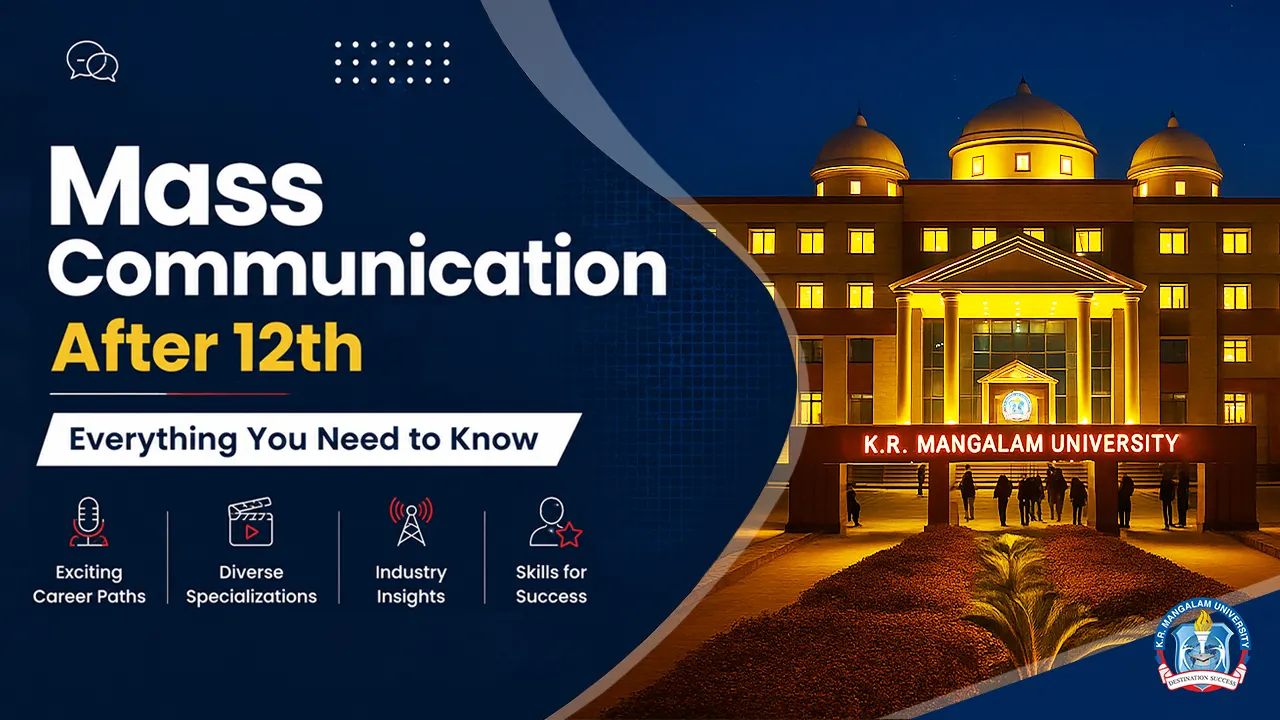
The stories you tell today can shape the conversations of tomorrow—choose the right mass communication course to build that future.
The field of mass communication has evolved remarkably in today’s fast-paced, interconnected world. What was once limited to print, radio, and television has transformed into a dynamic, multi-platform industry encompassing digital journalism, mobile journalism, social media strategy, multimedia production, brand communication, content marketing, digital storytelling, public relations, and emerging media technologies. As a result, mass communication courses after Class 12 have evolved to meet the changing demands of the media and communication industry, equipping students with future-ready skills, industry-relevant knowledge, and a forward-thinking perspective.
Mass communication is much more than simply sharing information. It is about creating compelling stories, influencing public opinion, building powerful brands, and driving meaningful engagement across diverse media platforms. From journalism and advertising to public relations, digital media, and content creation, it encompasses every aspect of the modern communication ecosystem.
This guide explores the best mass communication courses after 12th, their eligibility criteria, and the key factors to consider when choosing the right programme. It also provides insights into career opportunities, industry trends, and the skills required to build a successful career in this field.
Quick Glance at the Blog
| Section |
What You’ll Learn |
| What is Mass Communication? |
Understand the scope of mass communication. Also learn various domains it covers. These domains include journalism, digital media, and advertising. |
| Why are Mass Communication Courses Becoming Popular? |
Explore the industry trends, growing demand for digital communication professionals, and the future scope of media careers. |
| Best Mass Communication Courses After 12th |
Discover the top undergraduate mass communication programmes available after Class 12 along with their duration. |
| Eligibility for Mass Communication Courses |
Learn the common admission requirements and eligibility criteria followed by universities that offer these courses. |
| How to Choose the Right Mass Communication Programme |
Understand the key factors to evaluate before selecting a university or programme. These factors include curriculum, internships, facilities, and placements. |
| Why Consider K.R. Mangalam University Mass Communication Programmes? |
Explore the programmes offered at KRMU, the practical learning approach, modern infrastructure, and career development support. |
| Which are the Skills Students Learn After Studying at KRMU? |
Learn about the industry-relevant skills developed during the programme. These skills include storytelling, digital content creation, multimedia production, media ethics, and analytics. |
| Careers in Mass Communication |
Explore popular career options, job roles, and average salary ranges after completing a mass communication programme. |
| Conclusion |
Summarises why mass communication is a future-ready career and how KRMU helps students build successful careers in the media industry. |
What is Mass Communication?
Mass communication is the process of creating and delivering information to large audiences through a variety of media. It’s a mix of creativity, technology, communication skills, marketing, storytelling and strategic thinking. From traditional platforms like newspapers, radio, and television to digital media, social media, podcasts, and streaming platforms, mass communication plays a vital role in shaping public opinion, building brands, and connecting people across the globe.
Students of Mass Communication learn the following:
- Journalism
- Advertising
- Public Relations
- Digital Media
- Television Production
- Radio Broadcasting
- Film Production
- Content Creation
- Social Media
- Corporate Communication
Why are Mass Communication Courses Becoming Popular?
Before exploring mass communication courses after 12th, it is important to understand why this field is becoming popular. Let’s explore the reasons below:
- Favourable Industry Condition: The Indian Media & Entertainment industry is projected to cross ₹3 lakh crore within the next few years.
- Rising Need For Digital Content: Radio and television are no longer the sole media that audiences are engaged with. The audience has shifted to online channels with the advent of digital media. As a result, top brands, media outlets, and companies are increasingly producing digital content. The focus of this content is on interactive formats and real-time storytelling.
- Growing Demand for Data-Driven Communication: These days, without the integration of data, communication is not complete. Media organisations, brands, and advertisers rely on data analytics to understand audience behaviour, measure content performance, identify consumer preferences, and optimise communication strategies. As a result, modern mass communication courses incorporate data analysis, audience insights, and digital analytics to equip students with the skills needed to create impactful, evidence-based communication campaigns.
Also Read: Mass Media and Communication: Course & Scope
Best Mass Communication Courses After 12th
Students can choose from several undergraduate mass communication programmes depending on their interests. Below are some of the most sought after mass communication courses:
| Course |
Duration |
| BA Journalism & Mass Communication |
3 or 4 Years |
| BA Mass Communication |
3 Years |
| Bachelor of Journalism |
3 Years |
| BA Advertising & Public Relations |
3 Years |
| BA Digital Media |
3 Years |
| BA Film & Television Production |
3 Years |
| BA Multimedia & Animation |
3 Years |
| BBA Media Management |
3 Years |
Eligibility for Mass Communication Courses
Most universities follow similar eligibility criteria for admission to mass communication courses. The common eligibility requirements are:
- Class 12 passed from a recognised board
- Minimum marks as prescribed by the university shall be obtained
- Meet specific entry criteria for the programme
Some universities may have their own entrance test or interview.
How to Choose the Right Mass Communication Programme?
Choosing the right mass communication programme is a crucial step towards building a successful career in the media and communication industry. Before taking admission, students should carefully evaluate a university or college based on the following factors:
- Industry-relevant Curriculum: Ensure the programme covers the latest trends in digital media, journalism, advertising, public relations, content creation, and emerging communication technologies.
- Industry Exposure: Look for opportunities to interact with media professionals through guest lectures, workshops, seminars, live projects, and industry visits.
- Internship Opportunities: Choose a university that offers internships with reputed media houses, advertising agencies, PR firms, production houses, and digital marketing companies.
- Faculty Expertise: Learn from experienced academicians and industry professionals who bring practical insights into the classroom.
- Media Laboratories: Check whether the institution provides access to modern media labs equipped with industry-standard software and tools.
- Studio Facilities: Hands-on training in well-equipped TV, radio, podcast, photography, and multimedia studios is essential for developing practical skills.
- Placement Support: Evaluate the university’s placement record, recruiter network, career guidance, and skill development initiatives.
- Alumni Success: A strong alumni network and successful graduates reflect the quality and credibility of the programme.
- Industry Collaborations: Partnerships with leading media organisations, news agencies, advertising firms, and technology companies can provide valuable learning and career opportunities.

Why Choose K.R. Mangalam University’s Mass Communication Programmes?
Choosing the right university is one of the most important decisions for building a successful career in the media and communication industry. A programme that combines academic excellence with practical exposure can equip students with the knowledge, skills, and industry experience needed to thrive in today’s dynamic media landscape.
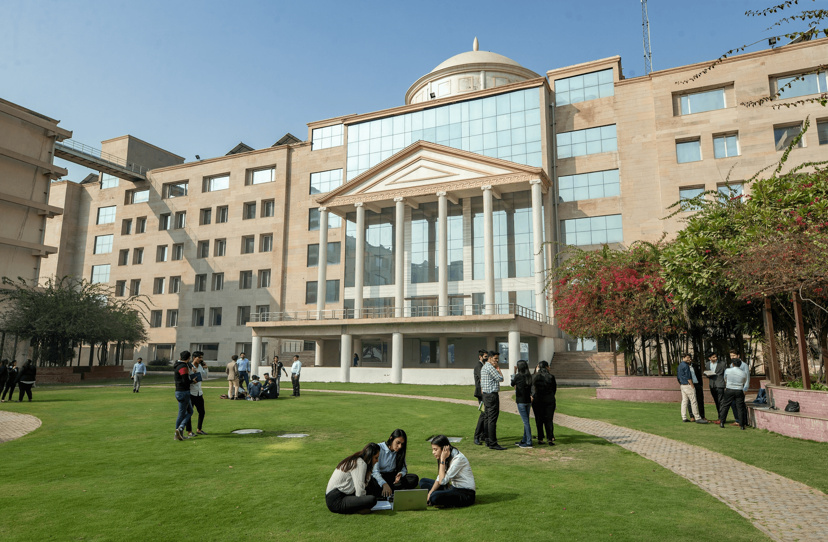
K.R. Mangalam University (KRMU) is among the leading universities in India for mass communication education, offering industry-oriented programmes at the undergraduate level. For students seeking mass communication courses after 12th, KRMU offers:
- B.A. (Journalism & Mass Communication) – 3 Year Programme
- B.A. (Hons. / Hons. with Research) Journalism & Mass Communication – 4 Year Programme
Designed in line with the latest industry trends, these programmes combine rigorous academics with experiential learning through hands-on projects, studio-based training, internships, industry interactions, and real-world media exposure, preparing students for diverse careers in journalism, digital media, advertising, public relations, broadcasting, content creation, and corporate communication.
Here’s Why K.R. Mangalam University Stands Out:
- Practical Learning with Industry Exposure: K.R. Mangalam University believes that the best way to learn mass communication is through practical experience. Its School of Emerging Media and Creator Economy (SEMCE) sets itself apart from other educational institutions by offering practical instruction. To prepare students for a changing media landscape, the curriculum places a strong emphasis on practical skills and industry insights.
- State-of-the-Art Facilities: Students at SEMCE have access to modern facilities, including an AV studio, a production control room, a radio lab, and a computer lab. These facilities provide hands-on training and practical exposure to various aspects of media production.
- Career Development Centre: The university’s Career Development Centre (CDC) has a group of experts who assist students in finding decent internships and employment opportunities. Not only that, the team also concentrates on enhancing the basics and soft skills of the pupils like body language, tech skills, and plenty more.
Skills Students Learn After Pursuing a Mass Communication Programme
Here are skills that students learn after pursuing a journalism & mass communication programme:
- Creativity: Creativity is at the heart of every successful communication campaign, whether it involves crafting compelling advertisements, writing news stories, producing films, or creating engaging social media content. A mass communication programme nurtures students’ imagination, storytelling abilities, and creative thinking to help them produce impactful content across diverse media platforms.
- Technical Proficiency: Students develop hands-on expertise in using industry-standard cameras, audio and video production equipment, editing software, graphic design tools, and multimedia production technologies. This practical exposure enables them to create professional-quality content for print, digital, broadcast, and social media platforms.
- Collaboration: Success in the media industry depends on effective teamwork. From film production and journalism to advertising and public relations, students learn to collaborate with multidisciplinary teams while strengthening their communication, leadership, project management, and interpersonal skills.
- Analytics and Data Literacy: Data-driven decision-making has become an integral part of modern communication. Students learn to analyse audience behaviour, interpret content performance metrics, and leverage data insights to develop effective communication, marketing, public relations, and content strategies.
- Multimedia Narration: Students master the art of telling compelling stories by integrating text, visuals, videos, audio, motion graphics, and interactive media. They learn to create engaging multimedia content tailored for digital platforms, television, social media, podcasts, and other emerging communication channels.
Careers in Mass Communication
One of the biggest advantages of pursuing a mass communication course after 12th is the wide variety of career opportunities available. The table below shows career opportunities in the field of journalism and mass communication, along with their average salary range.
| Career |
Description |
Average Salary (Freshers) |
| Journalist |
Reports news across print, TV and digital media |
₹3–8 LPA |
| News Anchor |
Presents news on television or digital platforms |
₹4–8 LPA |
| Public Relations Executive |
Manages brand image and media relations |
₹4–8 LPA |
| Digital Marketing Executive |
Creates online campaigns |
₹3–4 LPA |
| Social Media Manager |
Manages social media presence |
₹4–10 LPA |
| Content Writer |
Produces articles, blogs and website content |
₹3–7 LPA |
| Copywriter |
Creates advertising and marketing content |
₹4–8 LPA |
| Advertising Executive |
Plans promotional campaigns |
₹4–9 LPA |
| Radio Jockey |
Hosts radio programmes and podcasts |
₹3–8 LPA |
| Video Producer |
Produces digital and television content |
₹5–8 LPA |
| Film Production Executive |
Coordinates film and OTT production |
₹4–10 LPA |
| Corporate Communication Executive |
Handles internal and external communication |
₹5–10 LPA |
Note: Salary ranges are indicative estimates and may vary depending on employer, location, experience, skills, and specialisation.
Conclusion
Choosing a mass communication course after 12th opens the door to creative and fast-growing career options. The field has evolved beyond newspapers and television. It now also consists of digital media, advertising, public relations, broadcasting, social media, content creation, and corporate communication. Qualified media professionals are in demand across almost every industry as organisations are now placing greater emphasis on effective communication and digital engagement.
Selecting the right programme and university is equally important. A curriculum that combines theoretical knowledge with practical exposure, industry interaction, and internship opportunities can help students develop the skills required by today’s media industry.
Students who enroll at K.R. Mangalam University gain from a curriculum that is in line with industry standards. It has knowledgeable instructors and cutting-edge infrastructure. It also provides opportunities for experiential learning and robust career development support. Through practical training, internships, workshops, and industry connections, the institution prepares students to flourish in the continuously changing media sector.
Apply now at K.R. Mangalam University to begin your journey toward becoming a media and communication professional prepared for the future.
Also Read: B.A. in Journalism and Mass Communication: Fee, Scope & More
FAQs
Is mass communication a good career in 2026 and beyond?
Yes! The rapid growth of digital media, OTT platforms, online journalism, influencer marketing, and corporate communication has created strong demand for skilled media professionals.
Does K.R. Mangalam University offer mass communication courses after 12th?
Yes. K.R. Mangalam University offers B.A. Journalism & Mass Communication and B.A. (Hons. / Hons. with Research) Journalism & Mass Communication programmes. These programmes combine classroom learning with practical industry exposure.
Who is eligible for mass communication courses after 12th?
Students who have passed Class 12 from a recognised board and meet the university's minimum eligibility criteria can apply. Some universities may also conduct entrance tests or interviews.
What is the average salary after a mass communication degree?
Fresh graduates generally earn between ₹5–8 LPA, depending on the role, employer, location, experience, and skill set.
How do I choose the right mass communication college?
You must look for:
Updated curriculum
Experienced faculty
Media studios and labs
Internship opportunities
Industry collaborations
Placement support
Alumni success























 13+Years of Educational Experience