A Bachelor of Science (BSc) opens the door to a world of opportunities by blending knowledge, skills, and practical learning. It sharpens the ability to think critically, approach problems with logic, and find effective solutions. At the same time, it builds a strong academic foundation in the field of science and technology, empowering students to pursue diverse career paths or advanced studies with confidence.
So, what are the career opportunities after bsc? The options may seem endless and possibly overwhelming for many students. Some students simply have no idea what to do. Many students may be wondering which step to take next.
Would you try to get your master’s degree? Would you consider seeking employment right away? Is your BSc degree enough to get a decent position? To answer these questions, you need to first understand the challenges and opportunities you’ll get with a BSc degree.
This blog post will explore the myriad different options and discuss career options available after completing a science-based BSc.
Top Career Options After BSc
A BSc degree opens different options across different industries. What you ultimately choose will depend on your major. However, these skills are useful in almost every domain. Here are some of the most common post-BSc career options.
Higher Studies: The Path to Specialisation
Many BSc graduates move on to pursue higher education. This allows one to refine and specialise in one’s area of interest. Many post-graduates work leads to senior and higher-level work in universities and institutions related to science and research.
- MSc and PhD: Usually, an MSc will deepen your understanding of academic science in a specific area of interest, while a Ph.D. would typically be for those involved in scientific research, which is essential to fields such as biotechnology, chemistry, and physics.
- MBA: A science-based BSc followed by an MBA is a powerful combination. It allows you to work in the realm of technical knowledge and business acumen. Such graduates proceed to work in management, consulting, and/or entrepreneurship roles.
- Professional Courses: Fields like law, journalism, and education are often available to BSc graduates. Many professional courses require a bachelor’s degree as a general condition of entry.
Also Read: B.Sc. (Hons.) Computer Science with academic support of IBM

Career Opportunities After BSc
Direct Job Roles: Stepping into the Workforce
While not everyone is inclined to return to study, a BSc degree can deliver a job very quickly. The most important element is to understand which sectors value your degree.
1. IT and Technology: A BSc in Computer Science or IT is an obvious entry point to a fast-growing industry with many job roles in demand, such as software developer, data analyst, or network engineer. Even if your BSc degree was in an unrelated subject, it can be a simple transition with a few certified qualifications.
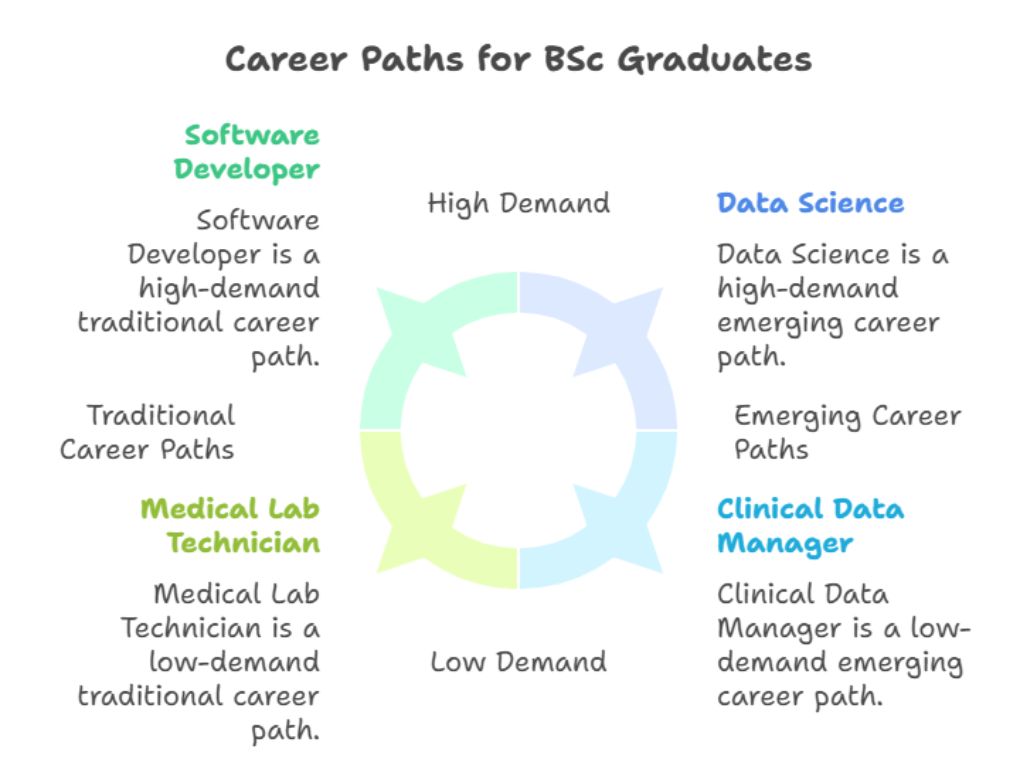
2. Healthcare and Pharmaceuticals: Many BSc graduates interested in biology, chemistry, and life sciences often take a more traditional career path. Job roles may include, but are not limited to:
- Medical lab technician (working in a lab, analysing samples)
- Research Assistant (assisting researchers and working in labs or clinics)
- Clinical Data Manager (managing data from clinical trials)
- Quality Control Analyst (ensuring drug and product safety in pharmaceutical companies)
3. Research and Development (R&D): Many companies, from food science to engineering, have R&D departments that advise new products and services, and a BSc is an ideal entry point in a role as a research assistant, assisting in designing and running experiments.
4. Education: A BSc is the first step in pursuing a career as a science teacher, either in schools or teaching privately, and can be a satisfying and valuable career for those who enjoy sharing knowledge.
5. Government Sector: Many government roles require a bachelor’s degree and can be secure, as well as offering comfortable benefits. E.g., working in government laboratories, public health departments or environmental agencies.
6. Data Science: This field is booming with a BSc in mathematics, statistics, or even physics is an ideal starting point for a career in data science. Data scientists analyse and interpret the informational value of data sets and provide organisations with insight to guide better decisions.
What to Do After BSc?
Completing your degree is an impressive accomplishment. Now it is time to move forward. Below are some recommendations and next steps:
Path 1: Further Education
If you’re going ahead with a further degree, you must initiate.
- Research Programmes: Look for M.Sc. (or equivalent) or professional programmes that meet your interests. While looking at programmes, think about the course materials, faculty members, and the future career direction you want to pursue.
- Entrance Exams: Entrance exams (GRE, MAT, MCAT) are required and typically a part of the graduate admission process. Be proactive, start preparing months before applying, and take all required entrance exams.
- Recommendations: A pertinent and strong letter of recommendation from your professors will be of immense importance in the future.
Path 2: Internships and Certifications
This is a great way to get experience. It also makes you more marketable.
- Internships: An internship provides experience in the real world. It can lead to a full-time job. It demonstrates to employers that you have experience and practical skills.
- Certifications: Professional certifications represent another way of standing out. For instance, a certification in digital marketing or data analysis can certainly help to make you attractive to tech firms. Even a basic project management certification could demonstrate your organisational skills.
Path 3: Direct Job Hunting
For direct job hunting, the key strategy one can follow is:
- Build a Resume: Clearly state all your skills, but do not just focus on your grades. Focus on the projects you were part of any lab practices you participated in, and your extracurricular activities.
- Network: Talk to people in the discipline you want to be in. Connect with alumni through LinkedIn and speak with them. Attend job fairs.
- Prepare for Interviews: Research the organisation. Practice your answers. Be ready to discuss how a BSc degree relates to the job you are applying for.
The Scope After B.Sc.: A Look at the Job Market
The job market for BSc graduates is healthy. Many sectors are expanding, and they are seeking people with scientific knowledge and focus. Following are the current booming sectors:
- Healthcare: The global healthcare environment is expanding. The number of lab technicians, research assistants, and data managers will continue to grow. The Bureau of Labor Statistics projects in the United States a growth of 7% for medical and clinical laboratory technologists from 2021 to 2023, which is faster than average.
- Biotechnology: This exciting scientific field involves applying biological systems to develop products and technology. It is estimated that the global biotechnology market will grow at a compound annual growth rate (CAGR) of greater than 13% between 2024 and 2030. That means more jobs for graduates with a BSc in biology or chemistry.
- Data Science & Analytics: Every business now relies on data. Companies want employees who can analyse data. The demand for data scientists is vast. The World Economic Forum cites data analyst/scientist as one of the five occupations with the most rapid growth. A B.Sc. in statistics or mathematics is a good first step to a career in data science.
- Emergent Roles: New career roles are developed on a daily basis. Many of these roles are hybrid roles, meaning they apply to different fields. For example, someone working as a “bioinformatician” would need skills in biology and computer science, or a “sustainability consultant” would need knowledge in environmental science and business. Having a BSc degree provides skill flexibility for new, emergent careers.
Is a BSc a Good Career Option? The Pros and Cons
Many students wonder or ask, “Is a BSc worth it?” The answer is ‘yes’ but it depends on the goals that students have. Let’s think about the advantages of a BSc degree.
- Strong Foundation: A BSc degree provides a strong foundation in scientific principles. Again, this is a transferable skillset.
- Critical Thinking Skills: Science education is about thinking logically and problem-solving, again, simple skills that can be used for any type of job.
- Demand in some fields: As we have explored, some sectors, such as the health and technology sector and any sector that develops new materials, environmentally friendly, and a sustainable future, will always be in demand for individuals with a science background.
- Pathway to Post-Secondary Education: As discussed above, a BSc is typically the entry point of most master’s programmes in science and medicine.
Drawbacks and Concerns
While a BSc degree offers a strong foundation, it also comes with certain challenges. In some fields, there is intense competition for entry-level jobs, as many graduates hold the same qualification. Often, further specialisation through a master’s or professional course is required to reach top positions.
Starting salaries for BSc graduates may also be lower compared to B.Tech or B.E. graduates, though this gap usually narrows with experience and higher studies.
Ultimately, choosing a BSc is a personal decision—it can be a great career path if you are ready to work hard, build practical skills, stay curious, and actively seek opportunities to grow.
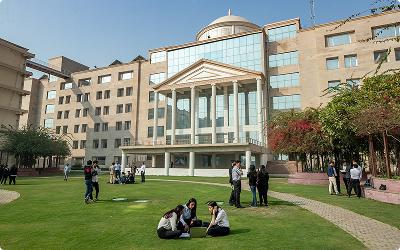
Why Choose a B.Sc. Programme at K.R. Mangalam University?
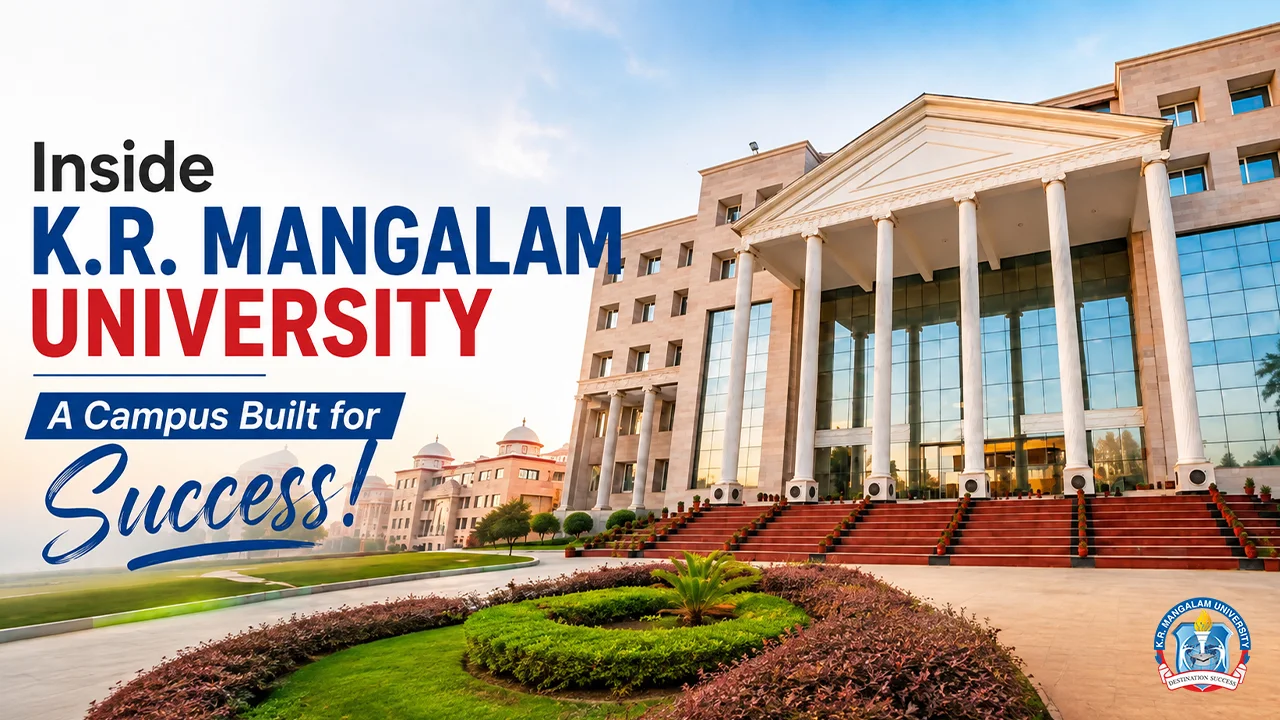
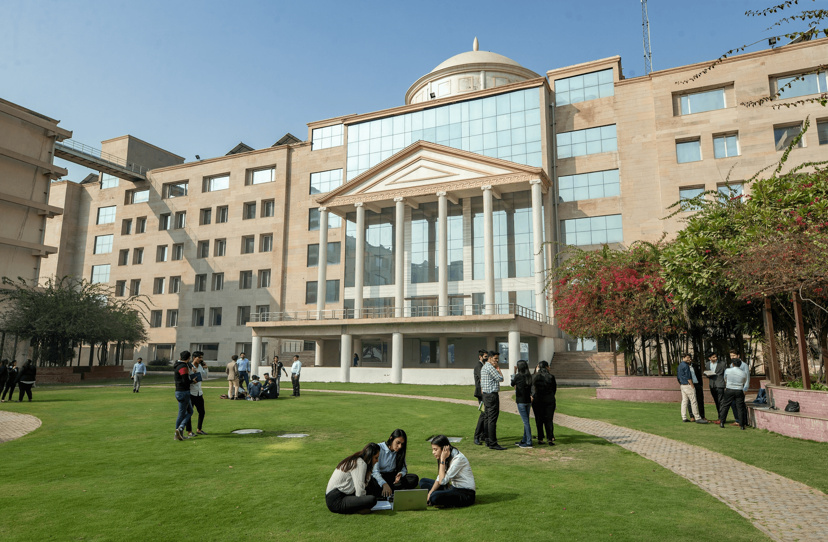
K.R. Mangalam University (KRMU) provides B.Sc. programmes that emphasise learning in theory, practical skills, and exposure to an industry environment. KRMU partners with global industry leaders, such as IBM and Emversity, and offers industry-based learning through our courses.
The university provides numerous and various specialisations such as computer science, cyber security, data science, forensic science, agriculture, physics, chemistry, and mathematics. In addition, KRMU’s healthcare-oriented BSc degree programmes like, Emergency Medical Technology, Respiratory Technology, and Cardiovascular Technology provide year-long work placements for students.
KRMU offers affordable fees, advanced and adequate laboratory resources, and job-centric curriculum, and ensures that its B.Sc. graduates are well academically and can enter the workforce ready for careers in scientific, technology, research, and healthcare areas.
B.Sc. Programmes Offered at KRMU
| Programme |
Duration |
Fee (per semester) |
Annual Fee |
Total Fee |
| B.Sc. (Hons.) Computer Science with IBM Academic Support |
3 Years |
₹70,000 |
₹1,35,000 |
₹4,05,000 |
| B.Sc. (Hons.) Cyber Security |
3 Years |
₹70,000 |
₹1,35,000 |
₹4,05,000 |
| B.Sc. (Hons.) Data Science |
3 Years |
₹70,000 |
₹1,35,000 |
₹4,05,000 |
| B.Sc. (Hons. / Hons. with Research) Physics |
4 Years |
₹45,000 |
₹90,000 |
₹3,60,000 |
| B.Sc. (Hons. / Hons. with Research) Chemistry |
4 Years |
₹45,000 |
₹90,000 |
₹3,60,000 |
| B.Sc. (Hons. / Hons. with Research) Mathematics |
4 Years |
₹45,000 |
₹90,000 |
₹3,60,000 |
| B.Sc. (Hons.) Forensic Science |
3 Years |
₹65,000 |
₹1,30,000 |
₹3,90,000 |
| B.Sc. (Hons. / Hons. with Research) Forensic Science |
4 Years |
₹65,000 |
₹1,30,000 |
₹5,20,000 |
| B.Sc. (Hons.) Emergency Medical Technology with Emversity (3 yrs + 1 yr internship) |
4 Years |
₹1,20,000 |
₹2,40,000 |
₹9,60,000 |
| B.Sc. (Hons.) Respiratory Technology with Emversity (3 yrs + 1 yr internship) |
4 Years |
₹1,20,000 |
₹2,40,000 |
₹9,60,000 |
| B.Sc. (Hons.) Cardiovascular Technology with Emversity (3 yrs + 1 yr internship) |
4 Years |
₹1,20,000 |
₹2,40,000 |
₹9,60,000 |
| B.Sc. (Hons.) Agriculture |
4 Years |
₹70,000 |
₹1,40,000 |
₹5,60,000 |
Conclusion
A BSc degree is a valuable qualification as it gives you a strong scientific foundation. With this degree, you will develop problem-solving and critical thinking skills. You will have many employment opportunities available after a BSc, whether you choose to pursue a master’s degree, go straight into a job, or gain a professional qualification; the journey is just beginning!
The main thing to keep in mind is to be proactive. You need to investigate your options and acquire practical skills. Discuss your desired area with professionals. Your BSc degree is the first step on a long and fulfilling career path; it is a steppingstone towards a rewarding and fruitful future. Join K.R. Mangalam University and get started for a prosperous future in the field of science.
FAQs
Still curious about Data Science as a career? Here are some quick answers to common questions:
Q1: What are the highest-paying jobs after a BSc?
Some of the highest-paying jobs after a BSc include careers in data science, biotechnology, clinical research, software development, and pharmaceuticals.
Q2: Can I get a government job after a BSc?
Yes, many government jobs are available that you can apply for after a BSc degree. The Union Public Service Commission (UPSC) and the state public service commissions offer plenty of jobs, with roles available in scientific departments and government research laboratories.
Q3: Is an MBA a good choice after a BSc?
Yes, an MBA is a good choice after a BSc. An MBA brings together your technical knowledge and business know-how to equip you for professional roles in management, healthcare administration or consulting.
Q4: What are the career options after a BSc in Chemistry?
A BSc in Chemistry leads to career opportunities in the pharmaceutical, chemical and food industries. You could work as a quality control analyst, research chemist or laboratory technician. Further studies could lead to research and development (R&D) roles or academia.

























 13+Years of Educational Experience