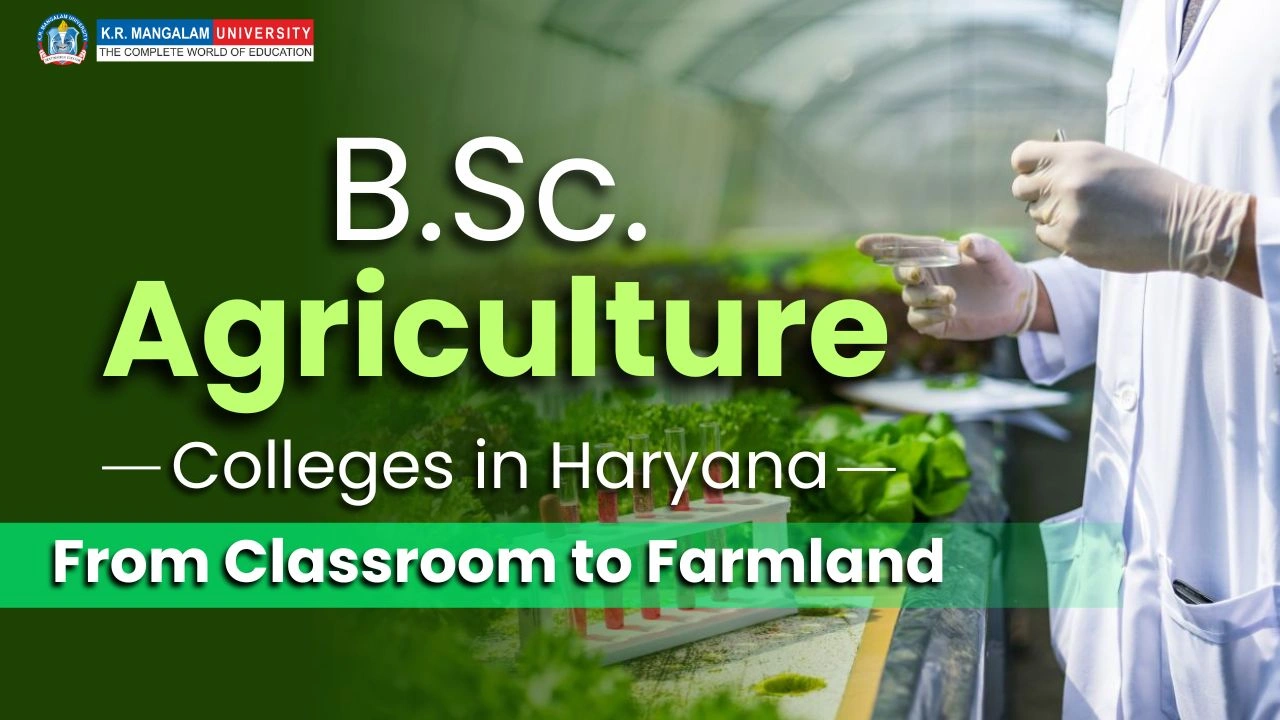
Agriculture today is where tradition meets innovation—and the professionals driving that change will shape the future of food security.
Many students are searching for the best B.Sc. Agriculture colleges in Haryana often have a common set of questions: Which college should I choose? What is the B.Sc. Agriculture course duration? Does the degree offer promising career opportunities?
As agriculture continues to evolve through advancements in biotechnology, climate-smart farming, precision agriculture, and agribusiness innovation, the demand for skilled agricultural professionals is growing rapidly. Haryana, one of India’s leading agricultural states, is home to several reputed institutions that offer high-quality agricultural education, equipping students with the knowledge and practical skills needed to excel in the modern agricultural sector.
This blog explores the top B.Sc Agriculture colleges in Haryana, explains the B.Sc. Agriculture course, discusses its duration and highlights why choosing the right institution can shape a successful career in the agricultural sector.
Quick Glance At the Blog
| Sections |
What We Will Cover |
| Why is Haryana an Excellent Destination for Agricultural Education? |
Understand why Haryana has emerged as a leading hub for agricultural studies, supported by its rich farming legacy and modern educational ecosystem. |
| What Is the B.Sc. Agriculture Course? |
Learn about the B.Sc. Agriculture course, its focus areas, practical components, and the scientific knowledge it imparts. |
| How to Choose Among B.Sc. Agriculture Colleges in Haryana? |
Find out the important factors students should consider, such as curriculum quality, practical exposure, faculty expertise, infrastructure, and placement support. |
| Why Choose K.R. Mangalam University for B.Sc. (Hons.) Agriculture? |
Learn how KRMU’s industry-oriented approach, experiential learning opportunities, internships, and modern facilities prepare students for successful careers. |
| Career Opportunities After a B.Sc. Agriculture |
Explore diverse career paths available to graduates, including roles such as agronomists, agriculture officers, etc. |
| Conclusion |
Highlights why B.Sc. Agriculture is a future-ready degree and emphasises how the right institution can equip students with the knowledge, skills, and exposure needed to thrive in the evolving agricultural sector. |
Why is Haryana an Excellent Destination for Agricultural Education?
Haryana has long been recognised as one of India’s agricultural powerhouses.
The state played a major role during the Green Revolution and continues to contribute significantly to India’s food production. Today, agricultural education in Haryana combines traditional farming knowledge with modern scientific advancements.
According to various education rankings, Haryana houses several well-established agricultural institutions offering practical exposure, research opportunities, field training, and industry connections.
Also Read: Guide On KRMU’s B.Sc. Agriculture Admission
What is the B.Sc. (Hons.) Agriculture Course?
The B.Sc. Agriculture course focuses on agricultural sciences and modern farming practices. It prepares students to address challenges related to food production, sustainability, resource management, and agricultural innovation. The B.Sc. Agriculture course duration is 4 years.
Students typically study subjects such as:
- Agronomy
- Soil Science
- Agricultural Economics
- Plant Pathology
- Genetics and Plant Breeding
- Horticulture
- Agricultural Engineering
- Agricultural Extension
- Entomology
The course combines classroom learning with practical training through field visits, laboratories, internships, and research activities.
How to Choose Among B.Sc. Agriculture Colleges in Haryana?
Choosing the right college is not just about earning a degree; it’s about preparing for the future you want to build.
When comparing B.Sc. Agriculture colleges in Haryana, students should consider factors such as academic quality, practical training, industry exposure, and placement opportunities—not just infrastructure.
Curriculum
Look for a curriculum that aligns with modern agricultural practices and emerging industry trends.
Practical Exposure
Field visits, demonstrations, and internships are essential components of agricultural education.
Faculty Expertise
Experienced faculty members can provide both academic guidance and industry insights.
Laboratory Facilities
Well-equipped laboratories enhance practical learning experiences.
Industry Connections
Exposure to agribusinesses and agricultural organisations can improve employability.
Research Opportunities
Participation in projects encourages innovation and scientific thinking.
Placement Support
Strong career guidance and placement assistance can help students transition into the workforce.
Why Choose K.R. Mangalam University for B.Sc. (Hons.) Agriculture?
A B.Sc. (Hons.) Agriculture degree opens the door to diverse career opportunities, but choosing the right institution plays a crucial role in preparing students for long-term success. Beyond textbooks and examinations, aspiring agricultural professionals need practical exposure, industry insights, and the confidence to solve real-world challenges.
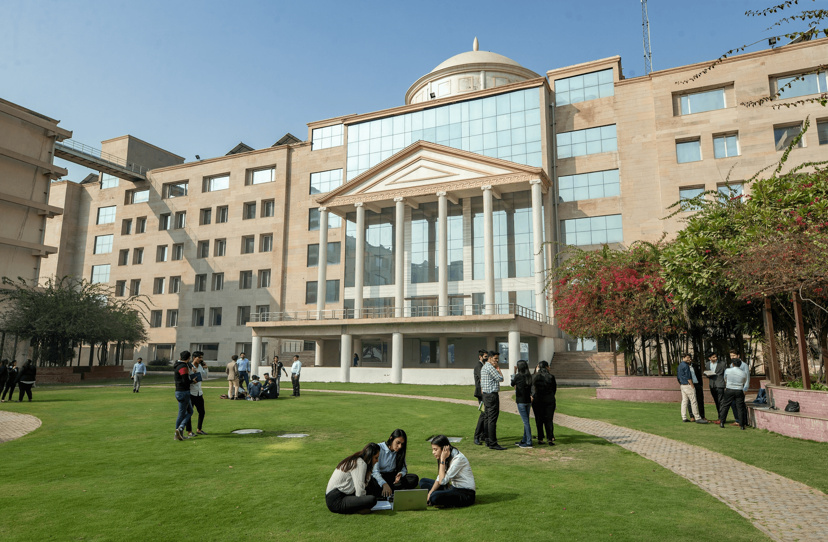
This is where K.R. Mangalam University seeks to make a difference. Among the leading institutions offering B.Sc. (Hons.) Agriculture programmes in Haryana, K.R. Mangalam University, stand out for their industry-oriented curriculum, modern infrastructure, and strong emphasis on experiential learning.
The B.Sc. (Hons.) Agriculture programme at K.R. Mangalam University is designed to equip students with scientific knowledge, practical skills, and a deep understanding of modern agricultural practices. The curriculum integrates emerging areas such as biotechnology, precision agriculture, climate-smart farming, agribusiness management, and sustainable farming techniques to prepare graduates for the evolving agricultural landscape.
Students benefit from well-equipped laboratories, experimental farms, field visits, internships, research opportunities, and hands-on training that bridge the gap between classroom learning and real-world agricultural practices. Guided by experienced faculty and supported by industry collaborations, the programme fosters innovation, critical thinking, and problem-solving abilities, enabling students to pursue successful careers in agriculture, agribusiness, research, and allied sectors.
Here’s what students can expect at KRMU:
Learn Beyond the Classroom
The programme blends academic learning with field visits, laboratory sessions, demonstrations, and hands-on experiences, enabling students to apply theoretical concepts to real-world agricultural practices.
Study an Industry-Relevant Curriculum
Students are introduced to modern areas of agriculture, including sustainable farming practices, agribusiness, agricultural innovation, and emerging technologies shaping the sector.
Gain Hands-On Experience
Internships and practical training opportunities allow students to apply their knowledge, interact with industry professionals, and develop workplace readiness.
Learn from Experienced Faculty
The programme is guided by faculty members who combine strong academic expertise with practical insights from the agricultural sector.
Develop an Entrepreneurial Mindset
Whether students aspire to work in government organisations, agribusiness firms, research institutions, or establish their own ventures, the university encourages innovation, problem-solving, and entrepreneurial thinking.
Build Future-Ready Skills
Communication, critical thinking, leadership, teamwork, and professional ethics are embedded into the learning experience to enhance overall employability.
Access Modern Infrastructure
Well-equipped laboratories and learning facilities support both scientific exploration and practical skill development.
What Are the Career Opportunities After a B.Sc. (Hons.) Agriculture?
One of the biggest advantages of pursuing a B.Sc. (Hons.) Agriculture is that it does not limit graduates to a single career path. Today’s agricultural sector extends far beyond traditional farming, creating opportunities across government departments, agribusiness companies, research organisations, startups, and the food industry.
Here are some of the career opportunities students can explore:
Agronomists
If improving crop productivity and promoting sustainable farming practices sounds exciting, a career as an agronomist can be a great fit. Agronomists work closely with farmers and researchers to study crops, improve cultivation methods, manage soil health, and develop solutions to agricultural challenges.
Average Salary Range: ₹4–10 LPA
Agriculture Officers
Agriculture officers play an important role in supporting farmers and implementing agricultural policies. They provide technical guidance, monitor farming practices, and help ensure that agricultural schemes and initiatives reach the communities they are intended to serve.
Average Salary Range: ₹4–7 LPA
Agriculture Development Officers
These professionals act as a bridge between government agencies and farmers. They promote modern farming techniques, conduct awareness programmes, facilitate the distribution of agricultural inputs, and contribute to improving productivity and food security.
Average Salary Range: ₹4–7 LPA
Agricultural Sales Executives
Agribusiness companies require professionals who understand both agriculture and customer needs. Agricultural sales executives help farmers choose suitable products such as seeds, fertilisers, farm equipment, and crop solutions while building strong industry relationships.
Average Salary Range: ₹3–8 LPA
Food Safety Officers
For students interested in food quality and public health, this role offers an opportunity to ensure that food products are produced according to the established regulatory standards. Food safety officers inspect facilities, monitor compliance, investigate concerns, and contribute to consumer safety.
Average Salary Range: ₹4–6 LPA
Note: Salary figures are approximate and may vary depending on the employer, location, skills, experience, and prevailing industry trends.
Conclusion
A B.Sc. (Hons.) Agriculture course offers far-reaching opportunities, from working in government departments and agribusiness firms to contributing to food safety, agricultural research, and sustainable farming initiatives. As the sector increasingly embraces innovation and technology, the demand for skilled agricultural professionals is expected to continue growing.
Choosing among the many B.Sc. Agriculture colleges in Haryana is about more than selecting a campus—it’s about finding an institution that equips students with the knowledge, practical exposure, and industry insights needed to thrive in a rapidly evolving agricultural landscape.
At K.R. Mangalam University, students benefit from an industry-oriented curriculum, experiential learning opportunities, internships, and a future-focused approach that prepares them to address real-world agricultural challenges with confidence.
Build the foundation for a successful career in agriculture with KRMU’s B.Sc. (Hons.) Agriculture programme.
Also Read: Is BSc Agriculture a Good Career Option?
FAQs
What is the B.Sc. (Hons.) Agriculture course duration?
The B.Sc. (Hons.) Agriculture course duration is generally 4 years, divided into eight semesters, combining theoretical learning with practical training.
What are the eligibility criteria for admission to B.Sc. (Hons.) Agriculture?
Candidates typically need to complete 10+2 from a recognised board with a science background and subjects such as Physics, Chemistry, Biology, and/or Mathematics, along with the minimum marks required by the university.
How should students choose among B.Sc. (Hons.) Agriculture colleges in Haryana?
Students should evaluate factors such as curriculum relevance, faculty expertise, practical exposure, laboratory facilities, internships, industry collaborations, placement support, and research opportunities.
Why choose K.R. Mangalam University for B.Sc. (Hons.) Agriculture?
KRMU offers an industry-aligned curriculum, experienced faculty, modern laboratories, field exposure, internships, entrepreneurial support, and experiential learning opportunities that help students build future-ready agricultural careers.
Is B.Sc. (Hons.) Agriculture a good career option?
Yes. With growing emphasis on food security, sustainable farming, agri-technology, and rural development, B.Sc. (Hons.) Agriculture offers strong career prospects and opportunities across both public and private sectors.

























 13+Years of Educational Experience